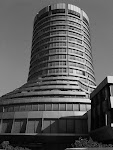
The memoirs of Carlos Molotov Pavlov a central planner who to avenge his loss of a cushy job in the Soviet entered the bank regulatory system in Basel and managed to create, seed and detonate an AAA-bomb in the heart of the capitalist Empire.
Chapter I: The fall of oil prices. How Pavlov lost his cushy job as a central planner in Kremlin
Chapter II: Pavlov’s theory. Since risks perceived as low carry a much larger destructive force than those risk that are perceived as higher, which by their sole nature make the investors more careful, what is needed is a method by which to enrich the leverage of low-risk investments.
Chapter III: The new soviet: Recurrent bank crisis despaired the world into handing over the full responsibility of bank regulations to an independent Basel Committee.
Chapter IV: Pavlov slips into Basel. A PhD in Quantitative Financial Analysis served as a Trojan horse.
Chapter V: Lucky break 1. The Basel Committee turned into a club of mutual admiration where all members shared one sole bedroom fantasy that of a world where no individual bank failed and no one had any interest in other issues… such as what is the whole purpose of the banks… like that of helping to generate decent jobs and sustainable growth.
Chapter VI: The collaborators 1. Global banks wanting to extend their reigns and searching for a system of regulations that would allow them to monitor credit from a long-distance so as to reduced the local competitive value of knowing your client and the feeling the firmness of his handshake.
Chapter VII: The collaborators 2. Finance ministers having the public debt "risk-weights" set at zero so that banks can lend to them without any capital requirements.
Chapter VIII: The difficulty. Keeping the focus on the individual banks so as not to raise suspicious of possible systemic crisis.
Chapter IX: Lucky break 2. The simultaneously ongoing process of reducing the individual citizens to being just credit scores which by means of risk discrimination allowed for the creation of many profitable niches of consumer debt financing and also numbed the general investor into accepting the truthfulness of any credit analysis.
Chapter X: The minimum capital requirements for banks. The design of a formula for bank equity based on a vague and limited definition of risk that allowed for an immense leverage for operations perceived as of a low risk.
Chapter XI: The credit rating agencies. The creation of an oligopoly in financial risk information that sooner or later had to result in the markets massively going where they should not go.
Chapter XII: Marketing. Empowering the credit rating agencies with the “If they are good enough for the Basel Committee they are good for you” which silenced all skeptical external directors.
Chapter XIII: The glorious June 26 2004… the AAA-bomb is armed!
Chapter XIV: Waiting. Seeing the leverages grow, the credit rating agencies place their AAA signs and the banks turning from lenders into mechanical spread optimizers.
Chapter XV: Lucky break 3. The generous provision of financially enriched uranium through the creation of economic disequilibrium between surplus and deficit countries.
Chapter XVI: Lucky break 4. The growing conviction that inflation, risks and volatility had all finally been conquered which allowed central banks to justify easy monetary policies.
Chapter XVII: Arming the bomb. How trillions of dollars were led by the AAA signs into the swamplands of badly awarded mortgages to the subprime sector.
Chapter XVIII: The blast. Huge! The first bank to fail from the badly awarded mortgages in California was a German bank that was not even involved in any mortgage lending in Germany.
Chapter XIX: The escape. Creating the cover up stories in order to convince the academia, media and politicians that the bomb had gone off because of a lack of regulations, economic disequilibrium, and easy monetary policies… anything except concoctions coming from the Basel Committee
Chapter XX: A close call. The Joker, in The Dark Knight said "You know, they're schemers. Schemers trying to control their worlds. I'm not a schemer. I try to show the schemers how pathetic their attempts to control things really are. So, when I say that … was nothing personal, you know that I'm telling the truth. It's the schemers that put you where you are. I just did what I do best. I took your little plan and I turned it on itself. Look what I did to this city with a few…" and no one heard the Joker thereafter saying “collateralized debt obligations”.
Chapter I: The fall of oil prices. How Pavlov lost his cushy job as a central planner in Kremlin
Chapter II: Pavlov’s theory. Since risks perceived as low carry a much larger destructive force than those risk that are perceived as higher, which by their sole nature make the investors more careful, what is needed is a method by which to enrich the leverage of low-risk investments.
Chapter III: The new soviet: Recurrent bank crisis despaired the world into handing over the full responsibility of bank regulations to an independent Basel Committee.
Chapter IV: Pavlov slips into Basel. A PhD in Quantitative Financial Analysis served as a Trojan horse.
Chapter V: Lucky break 1. The Basel Committee turned into a club of mutual admiration where all members shared one sole bedroom fantasy that of a world where no individual bank failed and no one had any interest in other issues… such as what is the whole purpose of the banks… like that of helping to generate decent jobs and sustainable growth.
Chapter VI: The collaborators 1. Global banks wanting to extend their reigns and searching for a system of regulations that would allow them to monitor credit from a long-distance so as to reduced the local competitive value of knowing your client and the feeling the firmness of his handshake.
Chapter VII: The collaborators 2. Finance ministers having the public debt "risk-weights" set at zero so that banks can lend to them without any capital requirements.
Chapter VIII: The difficulty. Keeping the focus on the individual banks so as not to raise suspicious of possible systemic crisis.
Chapter IX: Lucky break 2. The simultaneously ongoing process of reducing the individual citizens to being just credit scores which by means of risk discrimination allowed for the creation of many profitable niches of consumer debt financing and also numbed the general investor into accepting the truthfulness of any credit analysis.
Chapter X: The minimum capital requirements for banks. The design of a formula for bank equity based on a vague and limited definition of risk that allowed for an immense leverage for operations perceived as of a low risk.
Chapter XI: The credit rating agencies. The creation of an oligopoly in financial risk information that sooner or later had to result in the markets massively going where they should not go.
Chapter XII: Marketing. Empowering the credit rating agencies with the “If they are good enough for the Basel Committee they are good for you” which silenced all skeptical external directors.
Chapter XIII: The glorious June 26 2004… the AAA-bomb is armed!
Chapter XIV: Waiting. Seeing the leverages grow, the credit rating agencies place their AAA signs and the banks turning from lenders into mechanical spread optimizers.
Chapter XV: Lucky break 3. The generous provision of financially enriched uranium through the creation of economic disequilibrium between surplus and deficit countries.
Chapter XVI: Lucky break 4. The growing conviction that inflation, risks and volatility had all finally been conquered which allowed central banks to justify easy monetary policies.
Chapter XVII: Arming the bomb. How trillions of dollars were led by the AAA signs into the swamplands of badly awarded mortgages to the subprime sector.
Chapter XVIII: The blast. Huge! The first bank to fail from the badly awarded mortgages in California was a German bank that was not even involved in any mortgage lending in Germany.
Chapter XIX: The escape. Creating the cover up stories in order to convince the academia, media and politicians that the bomb had gone off because of a lack of regulations, economic disequilibrium, and easy monetary policies… anything except concoctions coming from the Basel Committee
Chapter XX: A close call. The Joker, in The Dark Knight said "You know, they're schemers. Schemers trying to control their worlds. I'm not a schemer. I try to show the schemers how pathetic their attempts to control things really are. So, when I say that … was nothing personal, you know that I'm telling the truth. It's the schemers that put you where you are. I just did what I do best. I took your little plan and I turned it on itself. Look what I did to this city with a few…" and no one heard the Joker thereafter saying “collateralized debt obligations”.
Chapter XXI: Lucky break 5. Conservative movements, many taken over by operators more interested in making money on conservatism, keep on having knee-jerk reactions against their traditional foes like Fannie Mae, and do not even notice the channeling of funds that the “risk-weights” cause.
Epilogue: The secondary effect of the AAA-bomb in a closed global confinement surpasses all expectations. Unemployment and misery. Significantly the Basel Committee is still in charge… while Carlos Molotov Pavlov awaits the AAA-Public-Debt-Bomb to explode. What a great future lies ahead for a central planner and his descendents.
Tentatively published in fall 2010 by the Voice and Noise Foundation